電/子/報 News

《臺灣酒駕防制社會關懷協會通訊》第六十九期 2026.01


臺灣酒駕防制

社會關懷協會通訊

第六十九期

2026.01



臺灣酒駕防制社會關懷協會

臺灣酒駕防制社會關懷協會自2013年12月07日成立至今邁入第13年。

本會結合社會力量,以NGO永續經營模式成立,致力於酒駕防制宣導、敦促酒駕修法、監督中央到縣市酒駕防制政策施行成效、酒駕型態之調查分析與研究、協助酒駕受害者與家屬之法律關懷事項等,積極降低酒駕危害,為國人交通安全與安定社會盡一份心力。

Alternate text

最新消息

「第28屆鳳凰盃
全國高中職辯論比賽」
-酒駕防制宣導

「114年全國 高中職/大專院校 校際辯論比賽/活動 酒駕防制宣導活動」最終站前進臺南市。
本次來到《第28屆鳳凰盃全國高中職辯論比賽》進行宣講,並成為主辦社團-國立臺南第二高級中學思言社之贊助單位。

【第28屆鳳凰盃全國高中職辯論比賽】聚集來自全國各地二十二支高中隊伍參賽。
現場約有七十位參賽選手、主辦單位眾執掌以及國立臺南第二高級中學林晏旭校長與多位臺南市 民意代表等齊聚一堂。
現場選手專心聽講,也認真進行酒精不耐症小試驗。
田野調查時林校長更是立刻轉頭關心學生飲酒情形。

盼望藉由全國奔走宣導,散播防酒駕幼苗至各高中生與大學生心中。
深切瞭解酒駕危險性,成為防酒駕大隊成員,保護親友生命安全!


媒體報導-三立新聞網:
誰還記得他/天才仁醫遭撞死 母一夜白頭…台灣酒駕足以燒掉3座台北101

感謝三立新聞協助報導完整專題新聞!
承受失去一生驕傲愛女的無盡悲痛,母親一夜白頭。12年來創會理事長陳敏香義無反顧地挺身而出防制酒駕!
帶著永遠無法癒合的傷口進行一次次採訪與倡議從未說不,一再反覆揭開傷口回憶無辜的摯愛與令人憤怒的酒駕。勇敢的精神與決心令人欽佩!

台大醫師曾御慈以卓越醫術與仁愛精神聞名,專精感染與愛滋病科,熱心照顧弱勢與急重症病患,被師長與同事譽為「天才良醫」。她聰明過人,提早一年入學小學,小四跳級到小六,高中順利考上第一志願北一女,展現非凡學習能力。然而,2013年返家途中,她遭酒駕累犯撞擊,不幸殞命。愛女的離世讓母親陳敏香一夜白頭,她認定酒駕絕非意外,而是一部對社會文明的「移動殺人機器」。12年來,陳敏香將哀痛化為行動,提醒社會正視酒駕危害,並持續推動生命教育與交通安全,為女兒討回公道,也為每一條生命發聲。


專家開講 

TAIPEI TIMES-Avoid the perils of drinking alcohol       
  By Chen Chiao-chicy(陳喬琪)is an attending physician at Mackay Memorial Hospital’s Department of Psychiatry.
      Translated by Eddy Chang  
   

At the beginning of the year, there are usually various parties such as New Year celebrations and year-end banquets before Lunar New Year. I would like to call on the public:Whether your cheeks take on a red flush when you drink, never drive after drinking and never drink before driving.

At many banquets, we can often observe different drinking styles of Taiwanese. Some people drink heavily to warm up the atmosphere, claiming that they would never get drunk, and even drive after drinking.

The casualties caused by drunk driving are intolerable. A decade ago, the annual number of drunk driving casualties in Taiwan was more than 20,000. Through the public’s collective efforts, the figure has declined in the past few years, dropping from 289 deaths and 11,225 injuries in 2020 to 160 deaths and 9,083 injuries in 2024. This trend indicates a gradual decline of drunk driving, while continuous efforts are still necessary.

In the past few years,“alcohol intolerance,”has been mentioned often, with some arguing that the facial flush from drinking might be harmful to the body. However, there are two scenarios of facial flushing after drinking among Taiwanese. One group experiences a gradual flush upon drinking and is able to continue consuming alcohol.

The other quickly develops a flush — as well as red ears, nausea, dizziness, headache, racing heart, drowsiness and even emotional agitation — upon drinking just a little alcohol. For this group, drinking is unpleasant, thus turning them into non-drinkers. Some of them also avoid dishes such as rice-wine chicken or duck. The latter group has been given a reason to avoid alcohol’s harm. Many ethnic groups in East Asian countries display such alcohol-related physiological phenomena.

Such “alcohol flush reaction” after drinking is not related to liver function. Instead, it is related to a type of enzyme in the liver that metabolizes alcohol into its metabolite acetaldehyde. Genetic variations in the enzyme that metabolizes alcohol are innate and might have complex correlations with the formation of alcohol addiction, but they have no direct connection to bodily harms.

A study shows that for Taiwan’s Han people, the percentages of those who do not become flushed slowly or quickly after drinking are 24, 31 and 45 percent respectively. As for indigenous people, the percentages are 40, 45 and 15 percent respectively. More importantly, 71 percent of Han drinkers do not become flushed after drinking, while 74 percent of indigenous drinkers become flushed slowly. It can be said that people who do not become flushed or do so slowly after drinking correlate with the subsequent development of alcohol addiction.

So, for those who do not become flushed or do so slowly after drinking, the real problem that deserves attention is what might happen to them if they keep drinking every day for five to 10 years.

I once tracked alcoholics with an average drinking history of 20 years, who consume 200g of pure alcohol every day. Subsequent toxicological studies found that the toxicity of alcohol itself can directly damage their tissues, cause organ injuries or cell degeneration leading to cancer. In other words, alcohol not only negatively affects human behavior and emotions, it also significantly harms the human body, regardless of whether one becomes flushed after drinking.

I would like to call on the public once again: Whether your face turns red upon drinking, never drive after drinking and never drink before driving.

Chen Chiao-chicy is an attending physician at Mackay Memorial Hospital’s Department of Psychiatry.

Translated by Eddy Chang

【中文原文刊載於《自由時報》「自由評論網」自由開講】
https://talk.ltn.com.tw/ article/breakingnews/5293400

【本文英文翻譯刊載於《TAIPEI TIMES》】
https://www.taipeitimes.com/ News/editorials/archives/2026/ 01/04/2003850000?utm_medium=P

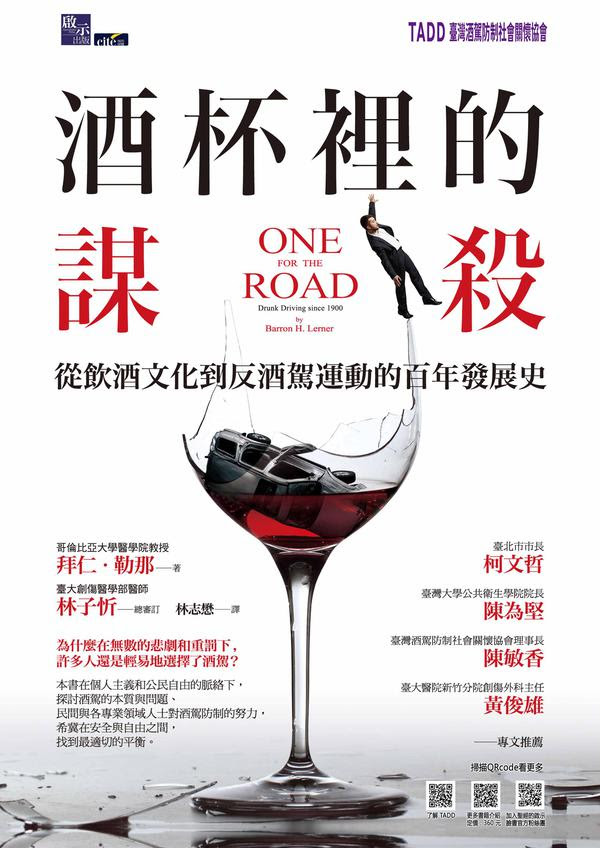
酒杯裡的謀殺

Alternate text

運動的成熟與分裂

      主張干預酒類行銷與販售的組織,主要是1971年成立、設址於華府的公共利益科學中心。公科中心提倡「營養健康、食物安全、酒精政策與健全科學」,體現那個時代若干運動的理念:消費者保護主義、環境保護主義,以及採取公衛路線解決社會問題,支持以良好科學研究為基礎的政府作為。該組織也屬於中間偏左,反對「業界強勢左右民意與公共政策」【註27】。

      公科中心努力要清除無線電波裡的酒精,但非首創。1930年代,基督教婦女禁酒聯合會就已經反對商業廣播促銷酒類,而且在1950年代,老派禁酒觀念認為酒精腐蝕美國年輕人道德,認同這種觀念的國會議員提出各式各樣的立法案,要限制或禁止酒類廣告。兩種主張都沒有成功,因為業界主張這種做法違反了飲料製造商的憲法權利。1983年由傑可布森(Michael Jacobson,公科中心創辦人之一)、艾金斯(Robert Atkins)和海克(George Hacker)合寫的《酒商:美國沉醉》(The Booze Merchants: The Inebriating of America)一書中,公科中心重啟了這個議題。

      海克是主導公科中心酒精政策計劃的律師,和其他批評造酒業的人一樣,他也喝酒。但他被酒駕者撞過兩次,也擔心喝酒—包括應酬喝酒—可能造成的傷害。有趣的是,《酒商》在禁酒令撤銷五十年後才寫出來,而且和反酒駕聖戰一樣,被歸為「新禁酒運動」的一環。禁酒令留下沉重的陰影,使得美國人不願意對買酒行為有所批評或干預。但隨著酒類銷售增加和飲酒過量的問題惡化—像是酒駕、肝硬化和胎兒酒精症候群—這種議題再一次成為眾矢之的【註28】。

      《酒商》的重點首要在於廣告議題,而其論點直接了當:造酒業運用不負責任的廣告,「刻意……將其產品推向酒精成癮者、年輕人和第一次喝酒的人。」【註29】有一項無可爭辯的事實:美國的酒類消費量從1930年代以來就一直往上升。例如,每年消費的葡萄酒從禁酒令末期的五千萬加侖,增加到1980年超過五億加侖。單單從1970到1980年, 每人酒類消費就增加了15%,增加最多的是啤酒的31% 和葡萄酒65%。

       同一時期,酒精飲料業的廣告開銷增加超過200%。到了1984年,百威啤酒及其他八個品牌的製造商安海斯布希,每年花費兩億四千五百萬美元在廣告上,包括一億兩千兩百萬美元在運動賽事聯播。到了1988年,造酒業的全國廣告支出合計為十四億美元,到了2005年增加二十二億美元【註30】。值得注意的是,造酒業一直對報章雜誌上的廣告自我設限。

【註27】見www.cspinet.org,accessed March 30,2010.另見Pennock, Advertising,172; Dan E. Beauchamp, Beyond Alcoholism: Alcohol and Public Health Policy(Philadelphia:Temple University Press,1980).
【註28】Michael Jacobson, Robert Atkins, and George Hacker, The Booze Merchants:The Inebriating of America (Washington,DC:CSPI,1983). 另見Pennock, Advertising,66-81,171; Garrett Peck, The Prohibition Hangover:Alcohol in America from Demon Rum to Cult Cabernet (New Brunswick, NJ: Rutgers University Press,2009), 202; David F. Musto, "New Temperance vs. Neo-Prohibition," Wall Street Journal, June 25, 1984, 26.
【註29】Jacobson, Atkins, and Hacker, Booze Merchants,vii.
【註30】出處同前,5;Peck,Prohibition Hangover, 211; Robert Lewis Thompson,“The Long Shadow of Prohibition," Washington Post, December 11, 1983, Gl, G4;Jonathan Rowe, "Liquor Foes Unite: Tax Hike, Restrictions Sought," Christian Science Monitor, May 6, 1988, accessed August 5, 2009,www.csmonitor.com/1988/ 0506/ adrink2.html .

關心酒駕消息

追蹤酒駕新聞

捐款防制酒駕